

Recycler Scale Accuracy and Your Car's Value

A dead car in a Staten Island driveway can look like a problem. To a recycler, it is also a measurable load of steel, aluminum, copper, usable parts, and fluids that must be handled correctly. Recycler scale accuracy is what turns that load into a fair dollar amount instead of a guess, a lowball quote, or a surprise at pickup.
If you are selling a junk car, totaled SUV, burned truck, or non-running work vehicle, you should know how the weight process works before anybody hooks it up. A buyer who talks clearly about the scale, the price, towing, and paperwork is giving you information you can use. A buyer who will not explain the numbers is asking you to take their word for it. Don't do that.
What recycler scale accuracy actually means
A vehicle is not paid for based on the number someone throws out over the phone. When a sale is weight-based, the final scrap portion of its value comes from the vehicle's verified weight and the current price paid per pound, ton, or hundredweight. Recycler scale accuracy means the scale is properly maintained, calibrated, and used consistently when determining that weight.
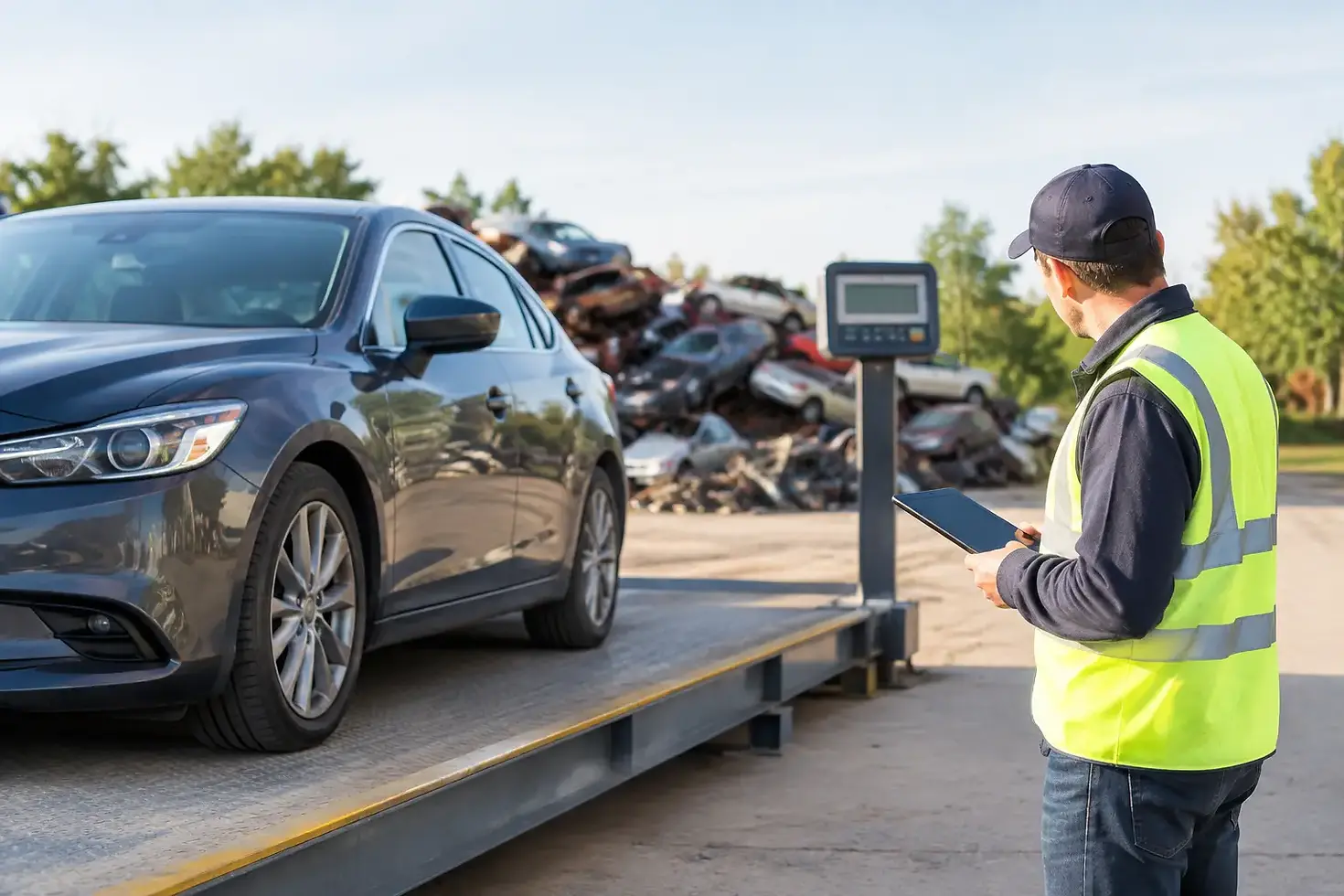
Most commercial recycling operations use truck scales designed to weigh heavy loads. The loaded tow truck or carrier is weighed, then weighed again after the vehicle is removed. The difference is the vehicle's net weight. This is often called a gross-and-tare process. Gross weight is the loaded vehicle and truck together. Tare weight is the empty truck. The difference should be easy to explain.
That does not mean every junk car is valued by weight alone. A complete late-model vehicle with a good catalytic converter, OEM wheels, an intact engine, desirable body panels, or recoverable parts may be worth more than its raw scrap weight. The key is transparency. You deserve to know whether the offer includes those items or whether they are being treated as extra value.
Why scale accuracy changes your payout
A few hundred pounds can make a real difference, especially with pickups, cargo vans, large SUVs, commercial trucks, and semis. Even a compact car can lose meaningful value if a buyer uses an estimate that is lower than the actual weight. That is why an honest recycler does not treat vehicle weight as an afterthought.
The vehicle's curb weight listed online is only a reference, not proof of what a scale will show. Your car may have missing parts, a stripped interior, aftermarket equipment, water damage, a full load of debris, or a damaged frame. A tow operator's equipment also affects the gross weight, which is exactly why the tare weight matters.
Fair measurement protects both sides. The recycler needs a correct number to process materials responsibly and price the purchase properly. You need a correct number because you are handing over a vehicle that still has tangible value. There is nothing complicated about that: accurate weight, clear rate, agreed towing terms, and payment that matches the deal.
Certified scales matter
Commercial scales are generally inspected and tested under state and local weights-and-measures rules. A properly operating scale should be able to provide a readable ticket or record showing the relevant weights. Requirements can vary by facility and location, but asking how your vehicle will be weighed is always reasonable.
You do not need to become a scale inspector before selling your car. You do need to work with a buyer willing to answer basic questions without getting defensive. Ask whether the vehicle will be weighed on a certified commercial scale, whether the payment is based on net weight, and whether you can receive or review the weight record.
If the buyer says, “Don't worry about it,” worry about it. Clear answers are part of a clean sale.
The details that can affect a vehicle's net weight
Your vehicle does not have to be pristine to have value. S.I. Cars For Cash buys vehicles in rough condition because recyclers can recover value from many materials and components. But the condition you describe should match what arrives at pickup. That helps prevent disputes and keeps the quote honest.
A car with an engine, transmission, catalytic converter, battery, wheels, and factory electronics is a different proposition from a shell missing major components. Floodwater can add temporary weight, but it can also damage parts and create handling concerns. A vehicle packed with construction debris, personal property, tires, or trash can create questions about what is being sold and what the recycler is allowed to accept.
Before pickup, remove your belongings, toll tags, license plates when required, documents, and anything you intend to keep. Be upfront if the engine is gone, the catalytic converter was removed, the car is on blocks, or the title is not immediately available. Surprises at the curb are where sellers often lose time and negotiating power.
Don't confuse a scale price with the full offer
Scrap prices move. Metal markets, fuel costs, processing demand, transportation, and regional supply all affect what a recycler can pay. A published scale price can be useful, but it is not automatically the final amount in your hand. The real question is how the buyer applies that price to your exact vehicle.
For example, a buyer may quote a high per-ton number but charge a heavy tow fee, deduct for missing parts without warning, or change the rate after loading the car. Another buyer may offer a straightforward all-in payout that accounts for local towing and the vehicle's condition from the start. The second offer can be better even if the advertised scrap rate looks lower.
Get the numbers in plain language before agreeing to pickup. Ask whether towing is included, whether there are any administrative or disposal charges, how missing components affect the offer, and when payment is made. If the answer is cash on pickup, confirm that it means payment is handed over when the vehicle is collected, not after it reaches a yard hours later.
How to protect yourself at pickup
The best time to clarify the deal is before the tow truck arrives. Give an honest condition report by phone, including make, model, year, location, major damage, missing parts, and whether the vehicle rolls and steers. If you have the VIN and title information available, have them ready. This keeps the buyer from claiming they were not told about a problem that was obvious from the start.
At pickup, compare the vehicle to the agreed description and confirm the amount before the car leaves your property. If payment depends on a scale reading taken elsewhere, ask how that result will be documented and how you will be paid. If the deal is a guaranteed quote based on the condition you reported, make sure the operator confirms that guarantee before loading.
You should also receive the appropriate sale or disposal paperwork. In New York, title and ownership requirements can depend on the vehicle's age, condition, and transaction type. Do not simply hand over keys and hope the registration issue disappears. Proper documentation helps show that you transferred the vehicle and helps protect you from future headaches tied to a car you no longer own.
Red flags worth walking away from
A legitimate buyer may need to revise an offer if the vehicle was materially misrepresented. That is different from inventing last-minute deductions. Be cautious when a company refuses to state towing costs, cannot explain how it weighs vehicles, pressures you to sign blank paperwork, or insists on taking the car before discussing payment.
Another warning sign is a quote that sounds dramatically higher than every other offer but comes with vague language. “Up to” pricing is not a guaranteed payout. Neither is a rate that ignores the fact that the car is missing an engine or sitting in a difficult towing location. Real value is specific, documented, and paid as promised.
A fair sale starts before the scale
Recycler scale accuracy is one part of getting paid fairly, not the whole story. The right buyer also considers vehicle completeness, recoverable parts, towing distance, legal transfer requirements, and the actual condition of the car. When those details are handled upfront, the scale becomes what it should be: a trustworthy measurement, not a tool for reducing your payout.
If an unwanted vehicle is taking up space in Staten Island, Brooklyn, or anywhere in the tri-state area, get a clear quote, ask direct questions, and keep the paperwork close. Call now only when the buyer is ready to explain the deal from pickup to payment. Your car may be done on the road, but it should not leave your driveway for less than a fair, verified value.


Comments